

Six companies that want to sell satellite internet in Pakistan are now registered as local firms, but none of them can switch on a single connection yet. That includes Elon Musk’s Starlink, and the Starlink Pakistan launch, first promised in 2025, is still on hold. The Securities and Exchange Commission of Pakistan (SECP) confirmed the six registrations in a written reply to the Senate Standing Committee, as reported on 7 and 8 November 2026.
The SECP was clear that incorporation is only a corporate formality. Before any of these companies can serve customers, each needs a No Objection Certificate (NOC) from the Pakistan Space Activities Regulatory Board (PSARB), security clearance from the Ministry of Interior where foreign owners are involved, and an operating licence from the Pakistan Telecommunication Authority (PTA). So far, only one of the six has filed the PSARB certificate with the SECP.
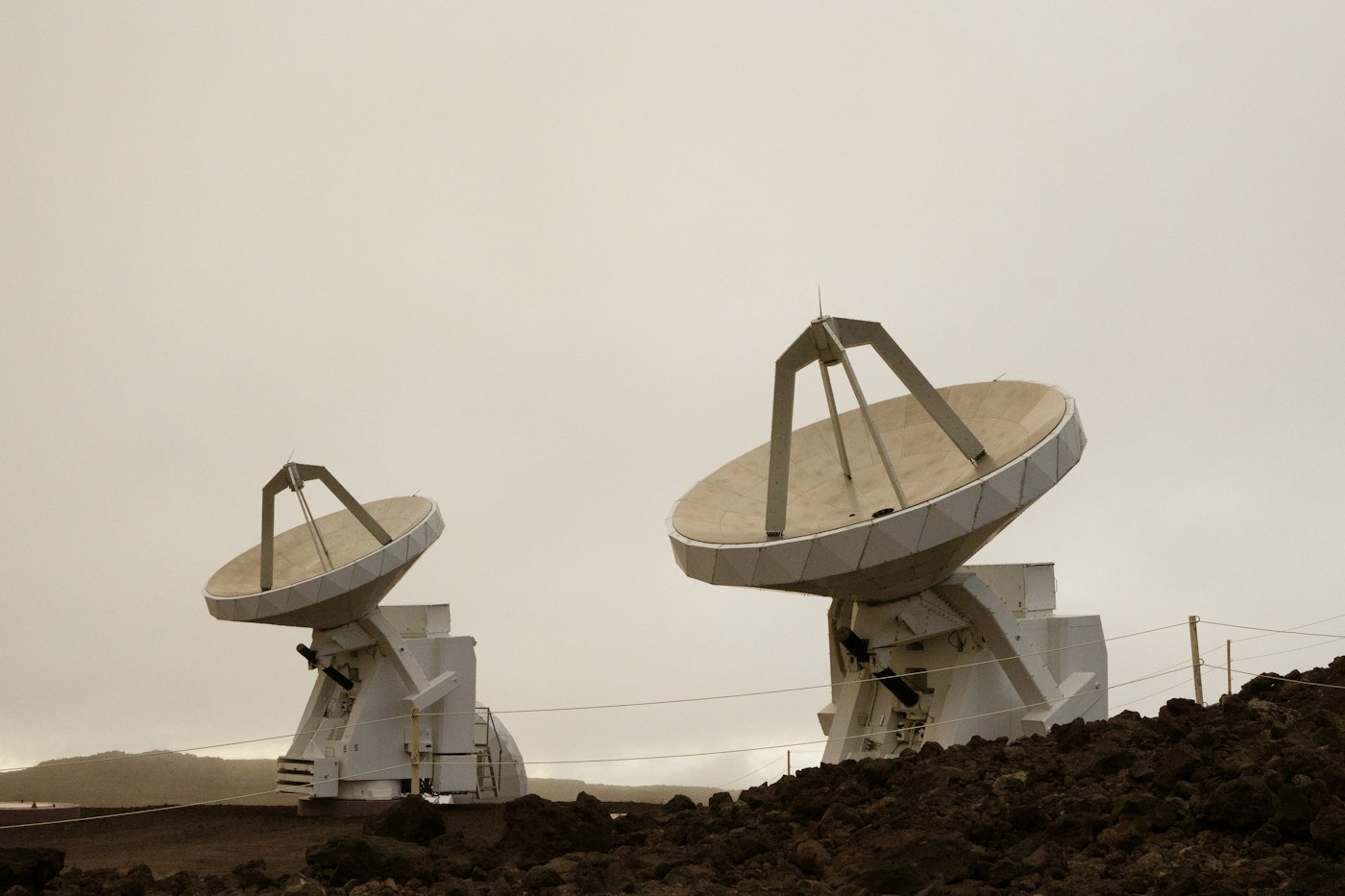
The six registered satellite firms
According to the SECP’s reply, as carried by Minute Mirror, Daily Pakistan and Samaa, the registered companies are Aether One (SMC-Private) Limited, Flynautix (Private) Limited, Galaxyspace Pakistan (SMC-Private) Limited, Space P (Private) Limited, Starlink Internet Services (Private) Limited and Spacesail Pakistan (Private) Limited.
Four of them, Aether One, Flynautix, Galaxyspace Pakistan and Space P, were incorporated under a new space business category that the SECP created with PSARB after the board was set up. Starlink and Spacesail were registered earlier, before that category existed. Space P is a subsidiary of the National Command Authority, and it is the only company that has submitted a PSARB NOC.
Three companies with foreign directors or shareholders, namely Starlink, Galaxyspace Pakistan and Spacesail Pakistan, are still waiting for the Interior Ministry to clear those individuals. Without that clearance they cannot move on to PTA licensing. The SECP has named a focal person from its Company Registration Division to work with a Cabinet Division committee on a compliance roadmap, Minute Mirror reported.
Why the Starlink Pakistan launch keeps slipping
The Starlink Pakistan story began in earnest in March 2025, when IT Minister Shaza Fatima Khawaja said the company had been allowed in on the Prime Minister’s instructions. Dawn reported at the time that this was an interim step tied to PSARB registration, and that a PTA operating licence would still be needed. The minister later said services could begin by late 2025. That did not happen.
By September 2025, Dawn and The Express Tribune were reporting that PSARB had not finalised its registration rules for low-earth-orbit (LEO) providers, while the PTA’s draft fixed satellite licence was awaiting approval. In February 2026 the Tribune reported that the government had put Starlink’s approval on hold over data security and the fear of losing the ability to suspend service during emergencies. One official told the paper, “We cannot allow a license to Starlink without ensuring a safety check.”
In April 2026 the IT minister told parliament that PSARB’s draft satellite communication regulations, including rules for non-geostationary operators, had cleared consultation, and that the PTA’s framework was heading to the federal cabinet. Starlink had registered with the SECP by then, and rivals such as OneWeb and Shanghai Spacecom had been told to do the same. Other contenders that have shown interest over the past two years include Amazon’s Project Kuiper and Canada’s Telesat.
The regulatory framework behind satellite internet in Pakistan
PSARB was created under the Pakistan Space Activities Rules, 2024, promulgated on 2 February 2024, and its mandate covers all activity in outer space and the upper atmosphere that touches Pakistan. On 29 October 2026 the board published the GSO Communication Satellite Registration Regulations, 2026 in the official Gazette, letting geostationary operators apply online. Starlink and most new entrants, however, run LEO constellations, and PSARB’s website does not yet list separate rules for them.
The draft PTA licence described by Dawn in 2025 would require local gateway earth stations, keep user data inside Pakistan, oblige providers to block content on PTA orders and bar foreign remote access to networks. It also proposed an initial fee of $500,000 and a 1.5 percent contribution to the Universal Service Fund. These terms were in draft form and may change before final approval.
What it means for freelancers, villages and IT exports
For Pakistan’s freelancers and small software firms, the appeal of satellite internet is simple: a connection that does not depend on local fibre or crowded mobile towers. Many remote workers outside big cities still rely on unstable mobile data, and Dawn noted in 2025 that roughly 145 million of more than 240 million Pakistanis had broadband access. LEO services could reach mountain valleys, desert districts and border areas where laying cable makes little commercial sense.
The catch is that the draft rules route all traffic through gateways inside Pakistan and require compliance with blocking orders, so satellite links are unlikely to bypass national shutdowns. Price will matter too, and no approved consumer tariff exists yet. For IT exporters, steady uptime is what clients abroad pay for, which is why the industry has pressed for a clear timeline. Until the PSARB NOCs, Interior Ministry clearances and PTA licences are in place, Starlink Pakistan service and its rivals’ plans remain on paper.
Key facts
- The SECP has registered six satellite internet companies, including Starlink Internet Services (Private) Limited.
- Only Space P, a National Command Authority subsidiary, has submitted a PSARB No Objection Certificate.
- Interior Ministry security clearance is pending for Starlink, Galaxyspace Pakistan and Spacesail Pakistan.
- Commercial service needs a PSARB NOC, security clearance and a PTA licence.
- PSARB published GSO satellite registration regulations on 29 October 2026; LEO-specific rules are not yet listed.
Related on ITInsider: 5G in Pakistan: FPCCI urges investment
Official sources: Pakistan Space Activities Regulatory Board (PSARB)
Also reported by: Minute Mirror, Daily Pakistan, Samaa, TechJuice, Dawn (March 2025), Dawn (September 2025), The Express Tribune (February 2026), The Express Tribune (April 2026), ProPakistani
Facts and figures checked against official sources by the ITInsider desk.