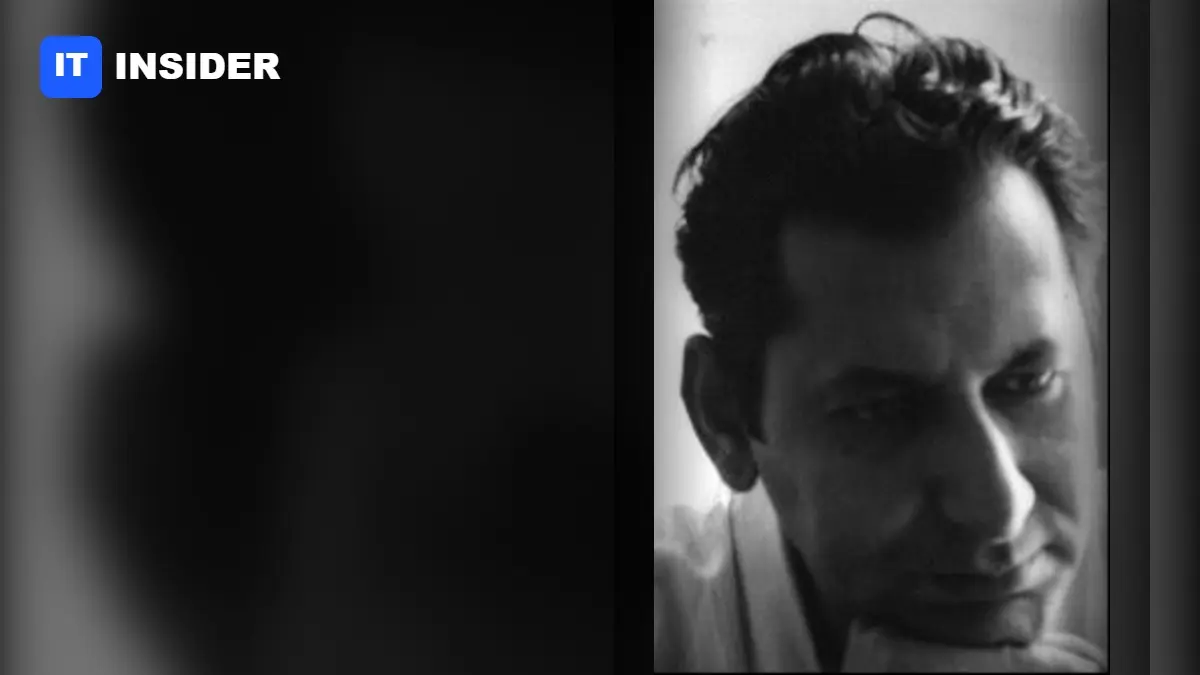
Zaheer Alam Kidvai (1940-2025) was a Pakistani merchant navy captain who came ashore in the 1980s and became one of the first people to bring personal computers into the country’s classrooms. Friends called him Zak. Later he was a multimedia producer, a blogger, the mentor of Sabeen Mahmud and one of the people behind Karachi’s T2F. He died in Karachi in December 2025, aged 85.
No full biography of Zaheer Alam Kidvai has been published. His life has been recorded only in pieces: a short Dawn obituary, a tribute by his friend Jehan Ara, a podcast interview, newspaper features about Sabeen Mahmud, and above all his own blog, which he kept for almost 20 years. This ITInsider biography brings those records together for the first time.
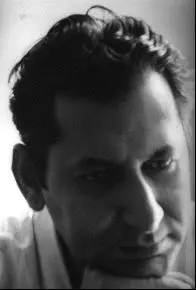
Zaheer Alam Kidvai at a glance
- Full name: Zaheer Alam Kidvai, known as Zak and, online, as Zakintosh
- Born: 2 October 1940, Aligarh, in British India
- Parents: Dr Azhar Kidvai, a physician, and his wife, whom Zak called Ummi
- Moved to Karachi: by sea from Bombay, autumn 1947
- First career: merchant navy, about 25 years, rising to captain
- Second career: computer education, multimedia and new media in Karachi
- Company: BITS (Beyond Information Technology Solutions)
- Known for: early computers in schools, multimedia CDs, mentoring Sabeen Mahmud, T2F
- Wife: Nuzhat Kidvai, women’s rights activist. Daughter: Ragni
- Died: December 2025, Karachi, aged 85
Family background: the doctor’s only son
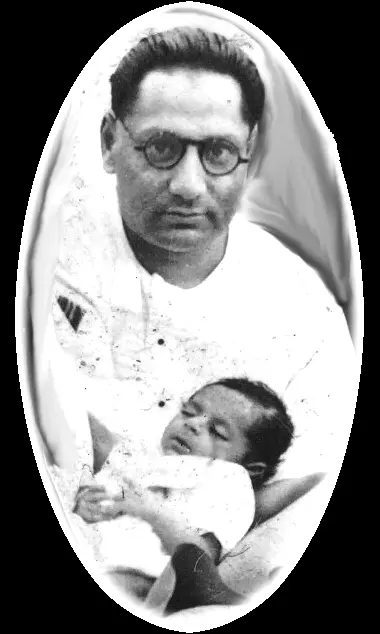
Zaheer was the only child of Dr Azhar Kidvai, whom he called Abi. In a series of posts about his father written in 2023, Zak recorded that Dr Kidvai was born in Rampur on 11 April 1900, studied at Aligarh and trained in medicine in Scotland. Before Partition he supported the Congress party.
The family was musical. Zak wrote that his mother’s side had a passion for music and that the singer Talat Mahmood was his father’s first cousin. Another relative, Manzoor Mahmood, sang Allama Iqbal’s Tarana on a recording made in Lucknow in 1937, which Zak would digitise more than 80 years later.
Childhood in wartime India
Zak’s blog dates his birthday to 2 October 1940 and gives his birthplace as Aligarh; Dawn’s obituary names the locality as Rasal Ganj. A family photograph he published is captioned “Aligarh – 1940 – My Birthday”.
During the Second World War his father served as a doctor in the British Army from late 1943, and the family moved with his postings. Zak remembered camps at Jhansi and Campbellpur, the town now called Attock, and wrote that he was the only child at all of them. He recalled being four and listening to 78rpm records with a family friend. Dawn adds that his father was posted in Iraq in 1945.
1947: from Delhi to Karachi by sea
By January 1946 the family was in Delhi, where Dr Kidvai ran a clinic. Dawn reports that the clinic was burned during the violence of Partition. In August 1947 the family left for Bombay. In September they sailed for Karachi aboard the S.S. Dumra of the British India Steam Navigation Company. Zak turned seven the day before the ship arrived, which places the arrival in early October 1947, as Dawn’s account also says.
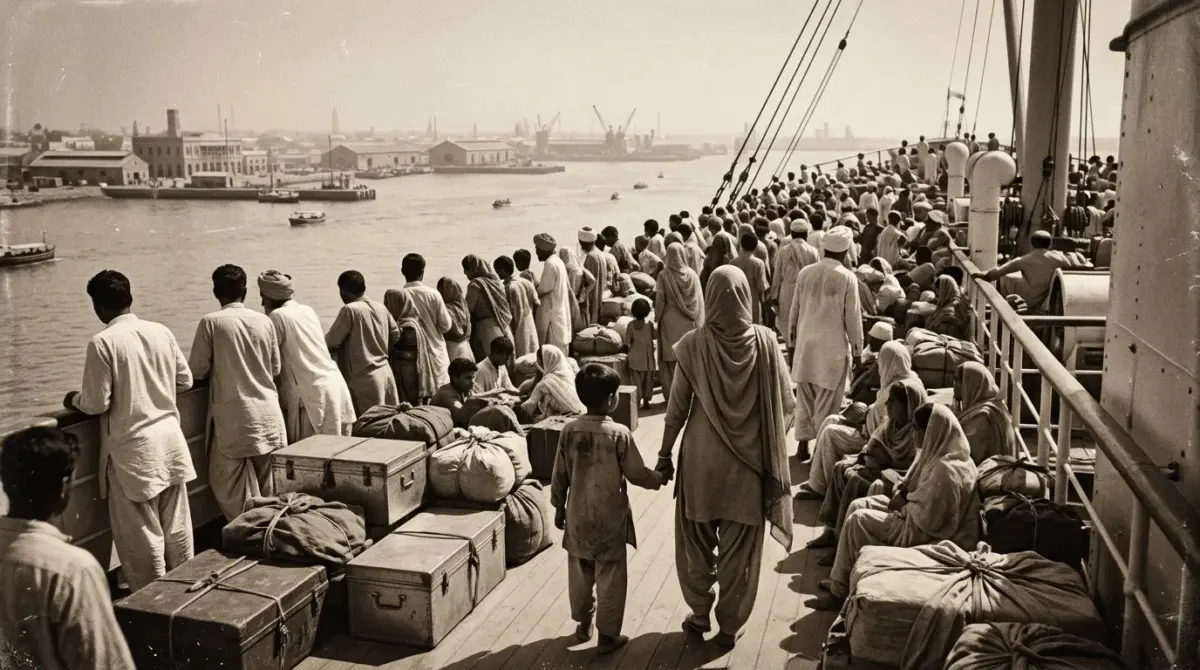
In Karachi his father worked at a hospital run by the Ramakrishna Mission, and the family lived on Nazareth Road. Zak remained loyal to the city all his life. Writing about Karachi in 2008, he said: “I still love it, madly!”
A reader who ran away to sea
As a boy Zak read widely. He wrote that he read D.H. Lawrence at 16, that Bertrand Russell’s Why I Am Not a Christian was among his birthday presents, and that Alice in Wonderland was his favourite book of all time. In 2005 he said he still re-read books he had bought between the ages of 12 and 15.
At 18 he left home for the sea. Years later, in a letter to his daughter, he described himself as an only child who had run away from home to go to sea. At the entrance interview for the merchant navy he quoted Joshua Slocum’s Sailing Alone Around the World, the account of the first solo voyage around the globe. The examining captain asked where he had found the book. Zak believed the answer helped him get the job he would keep for 25 years.
Merchant navy career: 25 years at sea
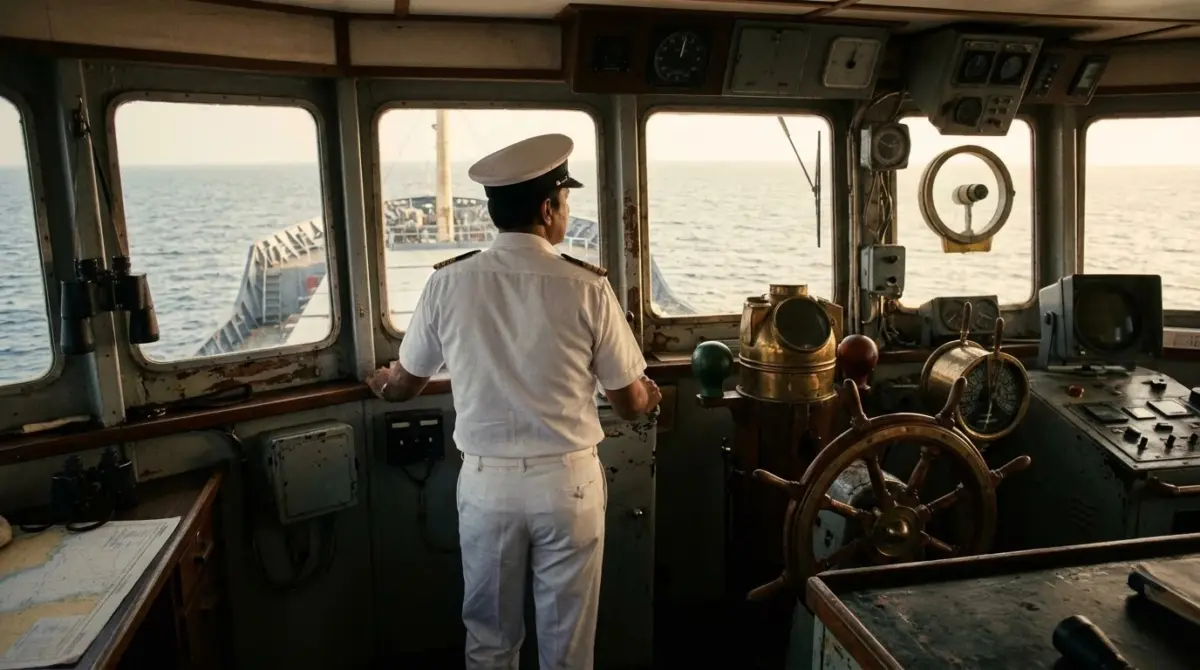
Zak’s own account gives his time at sea as 1959 to 1984. He served as a cadet under a Captain Wallace and later as Second Officer. In the 1960s, he wrote, one of his ships carried ammunition from Iran into Karachi. Over the years he sailed with lines in Singapore and Hong Kong, naming NOL in Singapore and GESL in Hong Kong among them. By 1983, he recorded, he was in command of a ship operated by the Gokal family’s shipping group out of Hong Kong, with Vipin Kaura as his chief engineer.
Dawn’s obituary says he joined the merchant navy in 1964 and became the youngest merchant navy captain in Pakistan. Jehan Ara remembered him as a master mariner.
19 September 1963: the six hours in Karachi
The most personal story in Zak’s writing is about his father’s death. On 18 September 1963 his ship, on which he was Second Officer, docked in Karachi just before 9am. It was a small, slow ship that made 9.5 knots at best, and it was in port for little more than six hours. Telephone calls from the port to the city then meant a wait of four to five hours. Early the next morning, 19 September, his father died. Zak was 23. Two days after the funeral he was back at sea.
He told this story in a letter to his daughter Ragni written on 19 September 2008, the 45th anniversary, and later published it on his blog. In the same letter he noted that Izhar Bhai, the father of his friend Kamal Abbasi, was then chairman of the Karachi Port Trust.
Hong Kong, the Al Barat and a lifelong friendship
Jehan Ara, who would later lead the Pakistan Software Houses Association (P@SHA) for many years, met Zak and Nuzhat in Hong Kong in the late 1970s. She was working in the public relations department of a shipping company and editing its in-house magazine, Albatross. Zak was in command of the ship Al Barat when it sailed into Victoria Harbour, with Nuzhat on board. Jehan recalled that he offered her chocolate and could not believe that anyone would refuse it. The friendship lasted nearly 50 years; she said he was like a brother to her.
Marriage to Nuzhat and the birth of Ragni
Zak married his cousin Nuzhat in 1970, which says it was a marriage for love. Nuzhat Kidvai became a well-known women’s rights activist in Karachi. Their daughter, Ragni, was born many years into the marriage, and Jehan Ara became her godmother. Ragni later studied music with Ustad Zafar Ali Khan, Zak wrote in 2011, and now lives in the United States.
Swallowing the anchor
Sailors call leaving the sea “swallowing the anchor”. Zak wrote that he did so soon after his daughter’s birth, at a time when his mother had been left in a wheelchair by an accident. His passport still listed him as a merchant seaman in 1986. Dawn gives a different date, saying he left the merchant navy in 1989, the year his mother died. Both accounts agree that his career at sea ended in the 1980s, after about a quarter of a century.
Computer pioneer: bringing PCs into Pakistan’s classrooms
Ashore, Zak wrote, he “started a company of my own”. It was the beginning of his second life in computers. In 2005 he recalled sending his “battered (once-trusty) Commodore-64” to a friend to computerise a garment factory.
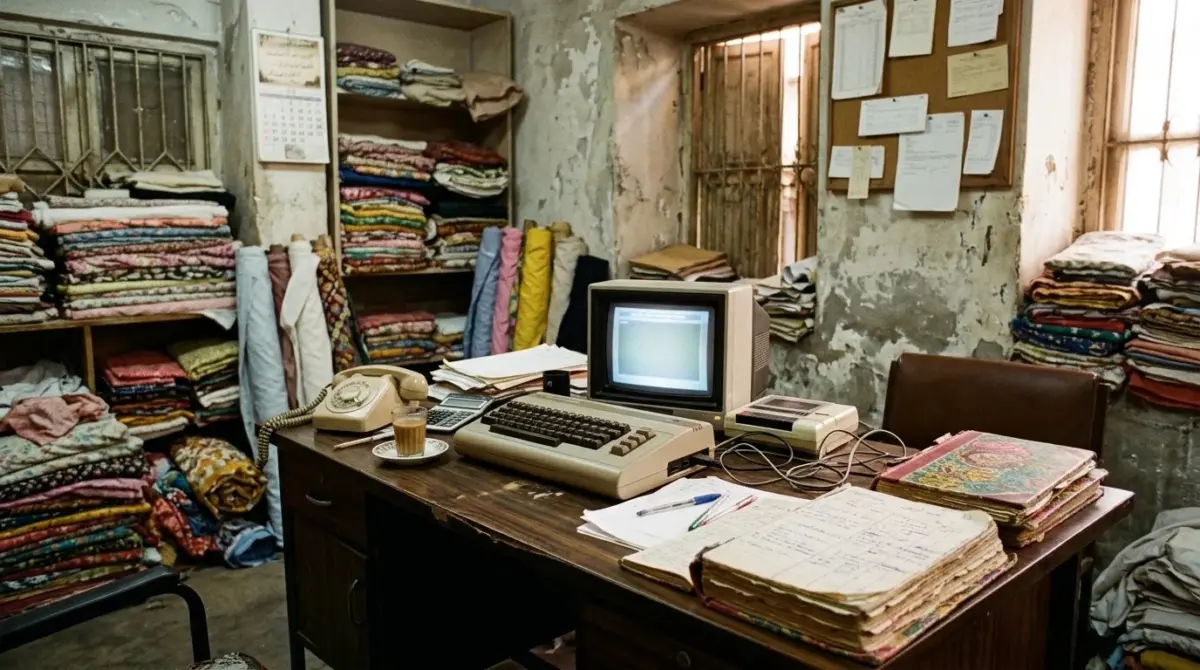
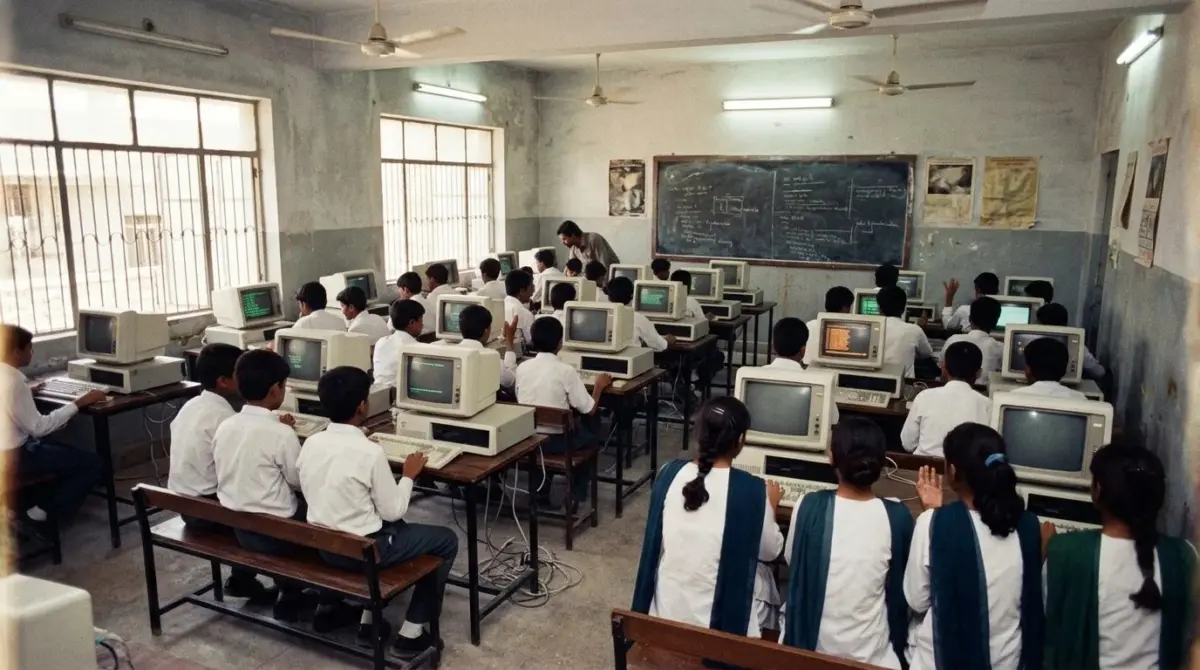
In the 1980s, when computers were still rare in Pakistan, he began introducing them in schools and universities. He set up Pakistan’s first computer company that both taught computer classes in schools and sold computers and software. In the first year of his company, Beyond Information Technology Solutions (BITS), he sold more than 100 computers. On his blog he referred to BITS, written as b.i.t.s., as “my company” and “my office”.
Zak was devoted to Apple. Journalist Beena Sarwar wrote that he introduced Apple computers to Pakistan. He worked on an Apple PowerBook and called himself Zakintosh online, a play on the Macintosh. He described himself as an education technologist and new media analyst and, with typical humour, listed his occupation as “unzipping minds”. In a 2010 video posted on Jehan Ara’s YouTube channel, he was introduced as the CEO of BiTS and a pioneer of education technology and multimedia in Pakistan.
His ideas about education
Zak was blunt about schooling. He wrote that he hated “Education” as an ideology but worshipped learning. In 2005 he published a series called The School of Tomorrow, arguing that schools should teach media literacy and that technology vendors should not be allowed to set the curriculum.
An office open to young minds
Zak’s office became a meeting place for curious young people. Astronomer Salman Hameed wrote in 2013 that he had known Zak since 1989-90, when Zak helped him and his friends organise AMASTROPAK, an amateur astronomy society, and gave them space in his office.
Mentor to Sabeen Mahmud
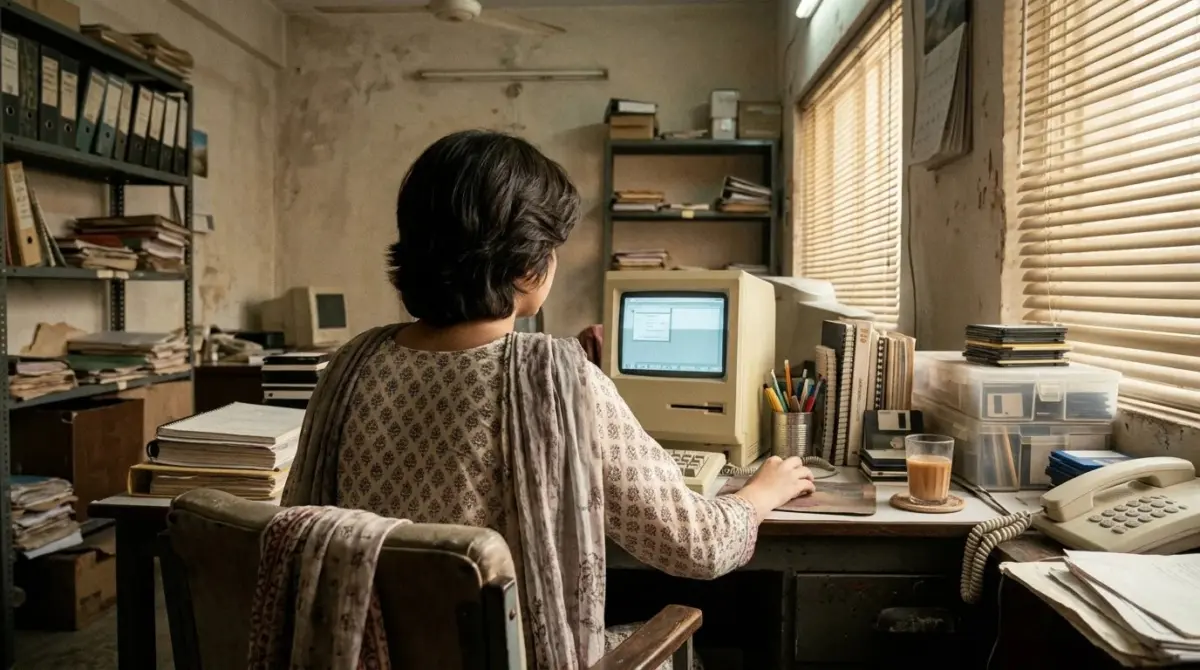
The best-known of the young people who walked into his office was Sabeen Mahmud. Accounts differ slightly on her age: she first came at 14 or 15, wanting to learn about computers. She fell in love with a Macintosh. Zak said she was only 17 when she started working in his office. He later joked that Pink Floyd had brought them together, and said he then led her to qawwali.
In the words of Dawn’s 2015 profile of Sabeen, he became her lifelong mentor and a close friend. Zak himself called her “a girl that I loved as my daughter” and, elsewhere, his “almost-adopted daughter”. Beena Sarwar described her as his adopted daughter.
Dawn’s 2015 profile says Sabeen later headed BITS, which she set up with the help of her mentor, Zak. Dawn’s 2025 obituary credits Zak with founding it. Both accounts tie the company to him.
Multimedia pioneer: CDs, recordings and Faiz
Zak also headed a technology company called Solutions Unlimited. With Jehan Ara, the company produced pioneering multimedia CDs in the late 1990s, at a time when few Pakistani homes had seen a CD-ROM. One of them, named on his blog, was the Aaj Kay Naam CD-ROM, which includes a recording of Faiz Ahmed Faiz reciting his poetry.
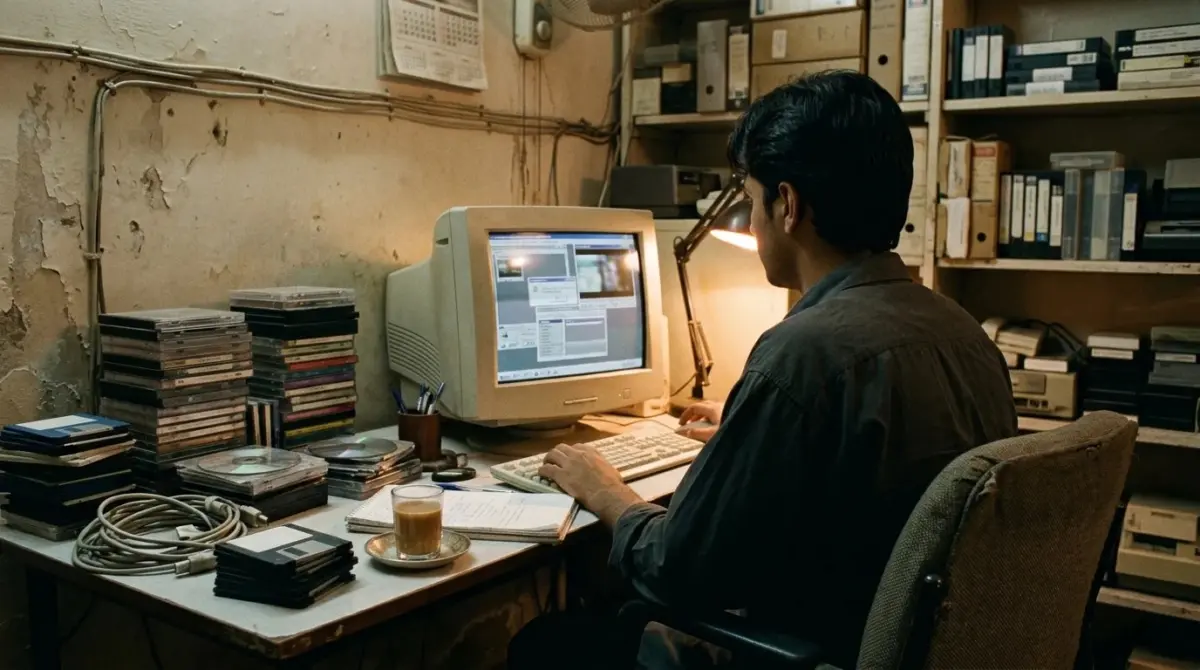
He also recorded music. He wrote that recordings of the qawwal Munshi Raziuddin with his sons were made for “my company (b.i.t.s.)” and were available at T2F, and that he attended Munshi Raziuddin’s burial in 2003. His own collection of Munshi Ji’s recordings went back to the 1960s. His musical tastes ran from Pandit Bhimsen Joshi’s raag Malkauns to Tina Sani’s Rabba Sachcheya.
T2F: The Second Floor
In 2007 Sabeen opened The Second Floor, or T2F, a small cafe, bookshop and event space in Karachi, as a project of her non-profit PeaceNiche. A message Zak reposted in January 2009 counted T2F as 612 days old, which dates its opening to May 2007. Beena Sarwar wrote that it was started in partnership with Zak, and Salman Hameed called him one of the people behind it. Zak described himself as “associated with T2F”.
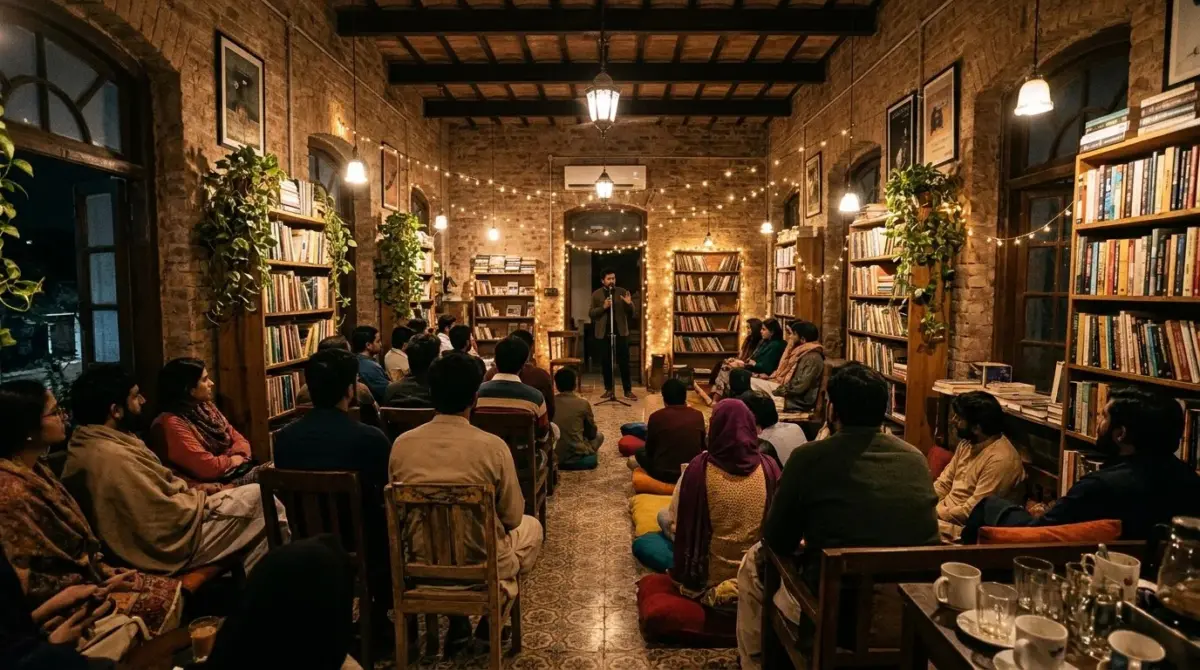
He wrote enthusiastically about its programmes, including a monthly science series called Science ka Adda held in a room that seated 44 people. He also recalled long conversations over coffee there with Sabeen and the writer Asif Farrukhi. Zak argued for keeping T2F affordable, saying that otherwise “no student would come”. He and Nuzhat joined citizens’ campaigns for peace and a free media; of Sabeen he said, “She went out to every protest with us.”
24 April 2015
On 24 April 2015, Sabeen Mahmud was shot dead in Karachi as she drove home from an event at T2F. Zak and Nuzhat were in the car behind hers, according to Beena Sarwar’s account in Scroll. In the months that followed he spoke at tributes to her, including one at the Arts Council in Karachi, and said she had taught him far more than he had ever taught her.
Blogger, photographer and sceptic
Zak started blogging in March 2005. His blog, Windmills of My Mind, ran until 2024. It mixed family history, memories of the sea, music, poetry and strong opinions on free speech, science and religion. Its sidebar backed Take Back the Tech, Global Voices and campaigns for internet freedom, and he released his writing under a Creative Commons licence. His profile line read: “They laugh at me because I am different. I laugh at them because they are all the same.”
He described himself as an agnostic from his teens and as a sceptic. In 2005, aged 64, he wrote: “I am 64 and hope to be 24 next birthday.” He was also a keen photographer. His Flickr account, under the name Zakintosh, holds more than 750 photographs, many of them of Karachi street life.
Last years
In later years Zak wrote more about his family than about politics. Between 2023 and 2024 he published a six-part series on his father and posts on the history of his Kirmani relatives. In 2024 he digitised the 1937 recording of Iqbal’s Tarana sung by Manzoor Mahmood and shared it with journalist Sahar Zaman.
His health was fragile. He had lived with diabetes for many years, and in 2024 he wrote that he had undergone a quadruple bypass, had a pacemaker and that his heart worked at 15 percent. He had long planned a memoir of his years at sea, to be called Ships and Shoes and Sealing Wax; it does not appear to have been published.
Nuzhat Kidvai died a few months before him. Zaheer Alam Kidvai passed away peacefully at home in Karachi in December 2025. Dawn reported his death on 6 December, saying he had died on a Friday; Jehan Ara’s tribute gives the date as 7 December. She called him a master mariner, a pioneer of computer education in Pakistan, and like a brother to her.
Legacy
Zaheer Alam Kidvai belonged to the generation that introduced Pakistanis to personal computers before the internet arrived. He sold and taught computers in schools in the 1980s, made multimedia CDs in the 1990s, and gave young people a place to learn. One of them, Sabeen Mahmud, went on to build T2F, one of Karachi’s best-known spaces for open discussion. His blog remains as a detailed first-hand record of a life that ran from Partition to the digital age.
Timeline of Zaheer Alam Kidvai’s life
- 11 Apr 1900 Father, Dr Azhar Kidvai, born in Rampur
- 2 Oct 1940 Zaheer born in Aligarh
- 1943-45 Moves with his father’s army postings, including Jhansi and Campbellpur
- Aug-Oct 1947 Delhi to Bombay, then by sea on the S.S. Dumra to Karachi
- c. 1959 Leaves home for the sea at 18
- 19 Sep 1963 Father dies in Karachi, the morning after Zak’s ship visits port
- 1970 Marries Nuzhat
- Late 1970s Commands the Al Barat; meets Jehan Ara in Hong Kong
- 1983 In command of a ship out of Hong Kong
- 1980s Leaves the sea; brings computers into schools; BITS sells 100+ computers in its first year
- 1989-90 Helps the amateur astronomy group AMASTROPAK
- Late 1990s Multimedia CDs, including Aaj Kay Naam
- Mar 2005 Starts the blog Windmills of My Mind
- May 2007 T2F opens in Karachi
- 24 Apr 2015 Sabeen Mahmud is killed
- 2023-24 Writes his family history online
- Dec 2025 Dies in Karachi, aged 85
Has a biography of Zaheer Kidvai been published?
As of November 2026, no book-length or full biography of Zaheer Alam Kidvai has been published. Published material about him consists of Dawn’s obituary of 6 December 2025, Jehan Ara’s tribute of January 2026, an audio episode titled Zindagi, Adab, Adaigee (episode 29 of the Dhaani podcast), and mentions in profiles of Sabeen Mahmud. His planned memoir was not completed.
Frequently asked questions
Who was Zaheer Alam Kidvai?
A Pakistani merchant navy captain turned computer-education pioneer, multimedia producer and blogger, known as Zak, who mentored Sabeen Mahmud and helped start T2F in Karachi.
When did Zaheer Kidvai die?
He died at home in Karachi in December 2025, aged 85. Dawn reported his death on 6 December; Jehan Ara gives the date as 7 December.
What was BITS?
Beyond Information Technology Solutions, the Karachi company linked to Zaheer Kidvai that taught computer classes in schools and sold computers and software. It sold more than 100 computers in its first year.
What was Zaheer Kidvai’s link to Sabeen Mahmud?
He was her mentor from her teens and called her a girl he loved as his daughter. T2F was started in partnership with him.
Was Zaheer Kidvai really a ship captain?
Yes. He spent about 25 years in the merchant navy and commanded ships, including the Al Barat, according to his own writing and Jehan Ara.
Where sources differ, this article gives both versions. If you knew Zaheer Kidvai, studied in one of his computer classes, or have photographs of him or BITS, please write to info@itinsider.pk.
Sources: Zaheer Kidvai’s blog, Windmills of My Mind, posts from 2005 to 2024 (including “India 3” and “India 4”, “Azhar Kidvai” parts 1 to 6, “The School of Tomorrow”, “Pervez Hoodbhoy, SuperStar”, “An unforgettable hour”, “The Quest (Dis)Continues”, “Sab” and “No Visa? Why???”); Dawn obituary, 6 December 2025; Jehan Ara, January 2026; Dawn, 2015; Dawn, June 2015; Beena Sarwar in Scroll, 2015; Salman Hameed, Irtiqa, 2013; Express Tribune, 2015; Express Tribune, 2016; Jehan Ara’s YouTube channel, 2010; Dhaani podcast, episode 29
Facts checked against published sources by the ITInsider desk.
Photos of Zaheer Kidvai and his father are from his blog, Windmills of My Mind, published under a Creative Commons Attribution-NonCommercial-NoDerivs 2.5 licence. Other images are representational and AI-generated; they do not show Zaheer Kidvai or his family.