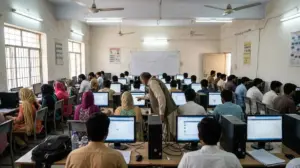

Twenty-two young Pakistanis have completed APIGA Pakistan 2026, a two-day academy on internet governance, AI policy and cybersecurity held at the U.S.-Pakistan Center for Advanced Studies in Energy (USPCAS-E) at NUST in Islamabad. The fellows were picked from more than 900 applicants, according to the organisers.
This was the second local edition of the Asia Pacific Internet Governance Academy (APIGA) in Pakistan, a youth programme linked to ICANN. ICANN’s engagement calendar lists the Pakistan academy as an in-person event in Islamabad on 23 and 24 November 2026.

What APIGA Pakistan 2026 covered
The cohort of 12 women and 10 men worked through internet governance frameworks, AI policy, cybersecurity and cybercrime, digital inclusion, internet identifiers, the APNIC policy development process, Universal Acceptance and internationalised domain names.
The organisers built in two hands-on exercises. In an ICANN model conference, fellows played different ICANN community groups and negotiated how DNS abuse should be defined. A second activity, called APIGA City, had them map the roles of different stakeholders in running the internet.
Key facts
- Event: APIGA Pakistan 2026, second local edition
- Dates and venue: 23 to 24 November 2026, USPCAS-E, NUST Islamabad
- Fellows: 22 (12 women, 10 men) from 900+ applicants, per organisers
- Topics: internet governance, AI policy, cybersecurity, digital inclusion, DNS
- First edition: UET Lahore, 2025
PTA, Ignite and ICANN voices on Pakistan’s digital future
The regulator was well represented. Farhan Khan, Assistant Director (Strategy and Development) at the Pakistan Telecommunication Authority, walked fellows through the layers of digital governance and stressed that no single body controls the internet. PTA Director General Dr Mukaram Khan, speaking on a panel, warned about increasingly convincing cyberattacks that use fake payment links and cloned domains, and called for international cooperation to strengthen AI infrastructure in Pakistan.
On the same panel, Ignite’s Head of AI Zakir Syed pointed to skills programmes involving more than 7,000 participants and subsidised cloud computing for startups. AI professional Roshatey Jannat argued for transparent, risk-based AI rules, citing the European Union’s approach.
Zoya Rehman of the National Commission for Human Rights made a point many in the local tech industry will recognise: Pakistan needs a full data protection framework before it writes AI-specific laws. Najeeb Ul Hassan of ZettaByte showed how AI tools are being misused to build cloned websites and sharper phishing attacks.
International speakers joined online, including ICANN’s Seher Sagiroglu and APNIC Policy SIG Chair Bikram Shrestha, while ICANN’s Dr Sarmad Hussain, who leads its internationalised domain names and Universal Acceptance work, was among the other speakers.
Why it matters for Pakistan’s tech sector
Pakistan usually gets only a handful of seats at regional internet governance academies, which is the main reason the organisers set up a local edition. A wider pipeline of young people who understand DNS policy, cybersecurity and AI regulation is useful at a time when the government is debating online regulation, cybercrime enforcement and AI rules.
The cybersecurity warnings also match what Pakistani users are seeing. Fraud through fake links and cloned sites is a major focus for the newly restructured NCCIA, and calls for balanced, context-based rules echo the government’s own stated approach to digital regulation.
What comes next for the fellows
At the closing session, organisers briefed participants on international fellowships, regional internet governance forums and free online courses, and certificates were handed out. The academy was run by an organising committee led by Programme and Team Lead Nawal Munir.
Watch for whether APIGA Pakistan returns in 2027 with a larger cohort, and whether any of this year’s fellows land places in ICANN’s Fellowship or NextGen programmes or at the regional APIGA.
Official sources: ICANN engagement calendar, APIGA Pakistan, Pakistan Telecommunication Authority
Also reported by: UrduPoint (Pakistan Point News)
Facts and figures checked against official sources by the ITInsider desk.