
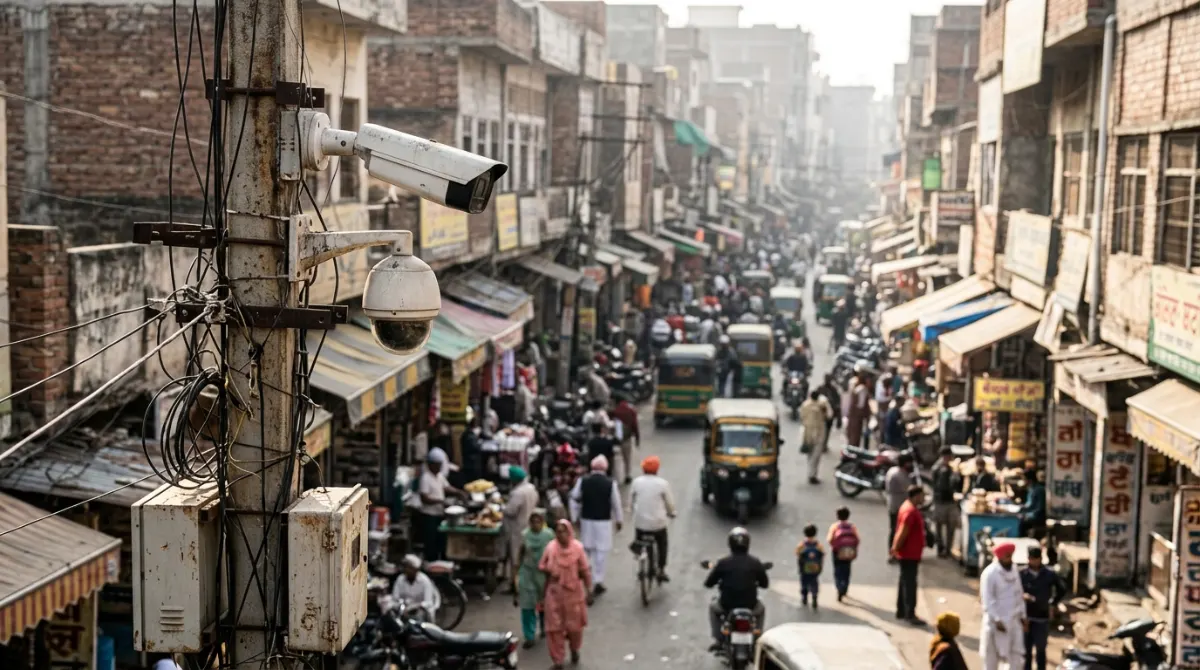
Punjab AI cameras run by the Punjab Safe Cities Authority (PSCA) flagged 17,946 cases of school-age children found outside classrooms during school hours in October 2026, according to PSCA monitoring figures cited by sources in the provincial school education department, as first reported by TechJuice. It is the first full month of data from the AI-based Child Protection System since the authority switched it on in September.
The numbers give the clearest picture yet of how Punjab is using its Safe City camera network beyond traffic and crime, and they come with a caveat. Every flagged case is a potential case only, and must be checked on the ground by the relevant departments before any action is taken.
What the Punjab AI cameras recorded in October
Of the 17,946 alerts, 12,378 involved children who were not in school uniform but were seen in public places during school hours. Another 4,516 cases involved children wearing a school uniform who were found outside school premises when they should have been in class.
The system also flagged 1,052 suspected cases of child labour, where children appeared to be working at shops, factories or markets. These were reported separately from the attendance alerts.
Monitoring for out-of-school children runs every day from 9:30am to 12:30pm, the window the PSCA set when it launched the system. Alerts generated during that period are forwarded to the authorities concerned for verification.
How the system works
The PSCA activated the AI-based Child Protection System across the province in early September, as reported by The Express Tribune at the time. The software analyses live footage from Safe City cameras and looks for two patterns: children without uniforms in public spaces during school time, and uniformed students away from their schools.
A PSCA spokesperson said at launch that the technology was meant to protect children from being pushed into labour and to support regular school attendance. The authority has not said how many cameras feed the system, what accuracy it has achieved so far, or how many of October’s alerts led to a confirmed case.
The scale of Punjab’s out-of-school problem
The camera data sits against a much larger official figure. The Punjab results of the 2023 Census, released by the Pakistan Bureau of Statistics, counted 9,600,164 children aged five to 16 who were out of school in the province. That is 26.98 percent of the school-age population.
Boys and girls are almost evenly split in that count, at about 4.77 million and 4.83 million respectively. Around 6.44 million of these children had never attended school, while 3.16 million had enrolled at some point and then dropped out.
The gap between rural and urban areas is wide. The census put the out-of-school rate at 31.53 percent in rural Punjab against 19.81 percent in cities. Among rural girls it rose to 33.42 percent. A separate measure, the Household Integrated Economic Survey 2024-25, placed Punjab’s out-of-school rate at 21 percent, unchanged from 2018-19.
Government programmes already running
The provincial government has several enrolment drives in place. Chief Minister Maryam Nawaz Sharif was told last year that about 1.1 million out-of-school children had been brought into classrooms through the Punjab Education Foundation. The province has also outsourced schools and used public-private partnerships to widen access.
The literacy and non-formal basic education department runs 20,273 informal schools serving more than 593,000 children. An accelerated learning programme lets older children finish basic education on a flexible schedule.
Teachers’ representatives say technology alone will not fix the problem. Punjab Teachers Union general secretary Rana Liaqat Ali pointed to unemployment, poverty, rising living costs and the outsourcing of public schools as the main reasons children stay out of class.
What it means for Pakistan’s public-sector AI
Punjab has been the most active province in putting AI into government services, from Safe City monitoring to digital training programmes such as the CMIT internship scheme. The child protection system is one of the first cases where computer vision is being used for a social welfare goal rather than policing alone.
That raises questions the PSCA has yet to answer publicly: how footage of minors is stored, who can access it, and what happens to a child once an alert is verified. Clear rules on data retention and follow-up will decide whether the system becomes a useful tool for schools and child protection officers or simply another stream of surveillance data.
For now, the October figures show that the cameras can detect large numbers of children outside school. Turning those alerts into enrolments is the harder part, and that work still depends on education officers, parents and welfare departments on the ground.
Key facts
- System: AI-based Child Protection System run by the Punjab Safe Cities Authority, active since September 2026.
- October 2026 alerts: 17,946 children outside schools during school hours.
- Breakdown: 12,378 without uniform in public places, 4,516 in uniform outside school.
- Suspected child labour cases: 1,052.
- Monitoring window: 9:30am to 12:30pm daily.
- Census 2023: 9.6 million out-of-school children aged 5 to 16 in Punjab (26.98 percent).
FAQ
Are all 17,946 cases confirmed?
No. They are AI-generated alerts that the relevant departments must verify on the ground.
Who runs the Punjab AI cameras?
The Punjab Safe Cities Authority, using its existing Safe City camera network.
When does the system check for out-of-school children?
Every day between 9:30am and 12:30pm.
Official sources: Punjab Safe Cities Authority monitoring data via the School Education Department, Punjab; Pakistan Bureau of Statistics, Census 2023; Household Integrated Economic Survey 2024-25.
Also reported by: The Express Tribune (system launch, September 2026).
Facts and figures checked against official sources by the ITInsider desk.
Featured image: representational, AI-generated