
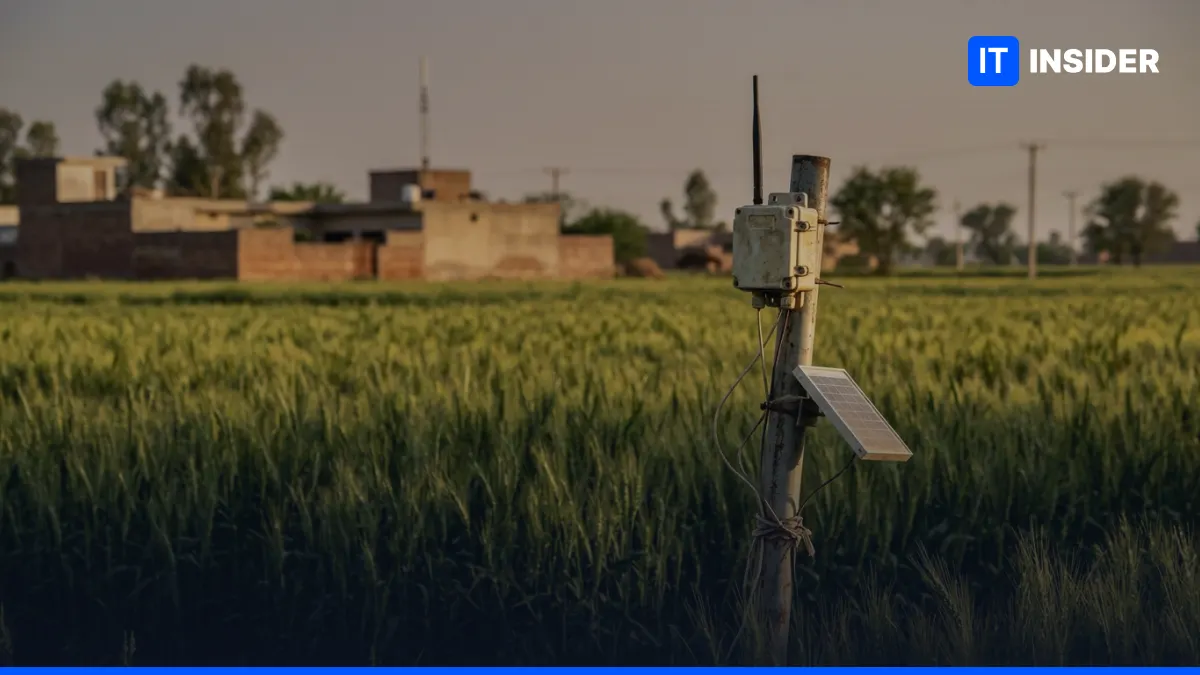
The Pakistan Telecommunication Authority (PTA) has proposed new PTA IoT licensing rules, the draft Internet of Things and Low Power Wide Area Networks (IoT-LPWAN) Licensing Regulations 2026, with a Rs100,000 initial fee for companies that sell IoT connectivity. The draft also creates cheaper registrations for private networks, software platforms and a one-year research sandbox, a move PTA hopes will turn paper licences into working smart-device networks.
The proposal surfaced in reports from 6 November 2026 and gained wider attention on 9 and 10 November, when ProPakistani, PhoneWorld and CW Pakistan described its trial-registration option for testing new internet technology. The rules are still a draft at the consultation stage and will only take effect once notified in the official Gazette.
- What: Draft IoT-LPWAN Licensing Regulations 2026 by PTA
- Commercial licence: Rs100,000 initial fee plus Rs5,000 non-refundable processing fee, valid five years
- Private networks and IoT platforms: registration at Rs10,000 plus Rs5,000 processing, valid five years
- Sandbox (research and trials): one-year registration at Rs2,000 plus Rs1,000 processing
- Roll-out deadline: services within one year, with one possible six-month extension
- Status: consultation draft; no public comment deadline reported so far
What the PTA IoT licensing rules propose
The draft sorts IoT activity into three buckets: licensing, registration and licence-exempt operations. A full licence is needed only by companies that provide LPWAN connectivity to third parties, including consumers, over designated bands. That licence runs for five years and costs Rs100,000 up front plus a Rs5,000 processing fee, and applications go through PTA’s online system.
Businesses that run a private IoT network on a single premises, such as a farm, factory, campus or industrial plant, would register instead of taking a licence. According to TechJuice, such networks may serve internal use only. Companies that build IoT platforms or applications on top of device data would also register, at the same Rs10,000 plus Rs5,000 cost for five years.
TechJuice reports that the proposed LPWAN bands are 433.05 to 434.79 MHz and 920 to 925 MHz, with transmit power capped at one watt and use on a secondary, non-interference basis. It also reports that cellular operators can keep offering IoT under their existing spectrum licences, that devices in shared short-range and ultra-wideband bands stay exempt, and that importers avoid a separate licence but still need type approval.
Sandbox, deadlines and reporting duties
The “new internet tech” angle in some headlines refers to a regulatory sandbox. Under it, firms, researchers and developers could register for one year to test new IoT ideas within a single premises, for a Rs2,000 fee plus Rs1,000 processing, per PhoneWorld and CW Pakistan. That is far cheaper than a commercial licence and gives early-stage teams a formal route to run pilots.
Licensed operators would have one year from the effective date to launch services and obtain a commencement certificate from PTA, or face cancellation. PTA may grant one extension of up to six months. Operators must register every gateway, file quarterly reports on active connections and working gateways, and share district-wise gateway data.
All backend traffic, including satellite backhaul, would have to pass through a PTA-licensed Local Access Provider, and PTA could order services suspended or restricted for national security or public safety. Existing LPWAN licence holders would keep their licences for the remaining term but must register gateways within 90 days and meet the new conditions.
How Pakistan’s IoT rules got here
PTA first issued its Regulatory Framework for SRD and Terrestrial IoT Services in February 2022 and began accepting class LPWAN licence applications on 31 March 2022. Uptake on paper was healthy, but real networks were not. In a consultation paper dated 30 May 2025, PTA said surveys of its 23 IoT LPWAN licensees found only five operational, as PhoneWorld reported at the time.
That led to version 1.4 of the framework, released on 18 December 2025. It added commencement certificates, gateway registration, a ban on storing IoT data abroad without PTA approval, and six-month non-commercial trials of up to ten devices per model. The 2026 draft turns that framework into formal regulations and stretches the trial window to a year.
The timing also follows Pakistan’s 5G auction in March 2026, which raised $507 million for 480 MHz of spectrum, according to Dawn. Jazz and Zong have since launched 5G services, and ITInsider has covered industry calls for more 5G investment to lift the digital economy. 5G and LPWAN are complementary: one carries high-speed traffic, the other cheap, low-power sensor data.
What it means for IoT startups, telcos and device makers
For IoT startups, the sandbox is the headline. A Rs3,000 total cost for a year of legal testing lowers the barrier for agritech, smart-meter and logistics pilots, and the platform registration gives software-only firms a clear status without building a network.
For would-be network operators, the message is “build or lose it”. The one-year launch deadline, quarterly reporting and district-level data aim to weed out dormant licence holders. Mobile operators keep their edge, since TechJuice reports they need no separate IoT licence, while local access providers gain guaranteed backhaul business.
Device makers and importers face no new licence, but type approval, band limits and the data-localisation rule will shape which products can be sold. Firms using foreign cloud platforms should watch how the final text treats data stored outside Pakistan.
FAQ: PTA IoT licensing rules 2026
Are the new IoT rules in force? No. They are a draft for consultation and take effect only after Gazette notification.
Who pays the Rs100,000 fee? Only commercial operators selling LPWAN connectivity to third parties. Private networks, platforms and sandbox users pay registration fees instead.
When can stakeholders comment? None of the coverage so far gives a deadline. Interested firms should check PTA’s consultation page and file comments early.
If finalised in this form, the PTA IoT licensing rules would give Pakistan a tiered, low-cost path from lab trial to commercial network, while tightening the screws on licensees who never switch on.
Official sources: PTA press release on SRD and IoT framework (Feb 2022), PTA consultation paper on IoT licence changes (May 2025), PTA revised IoT and SRD framework v1.4 (Dec 2025)
Also reported by: ProPakistani, PhoneWorld, TechJuice, CW Pakistan, Dawn
Facts and figures checked against official sources by the ITInsider desk.
Featured image: representational, AI-generated