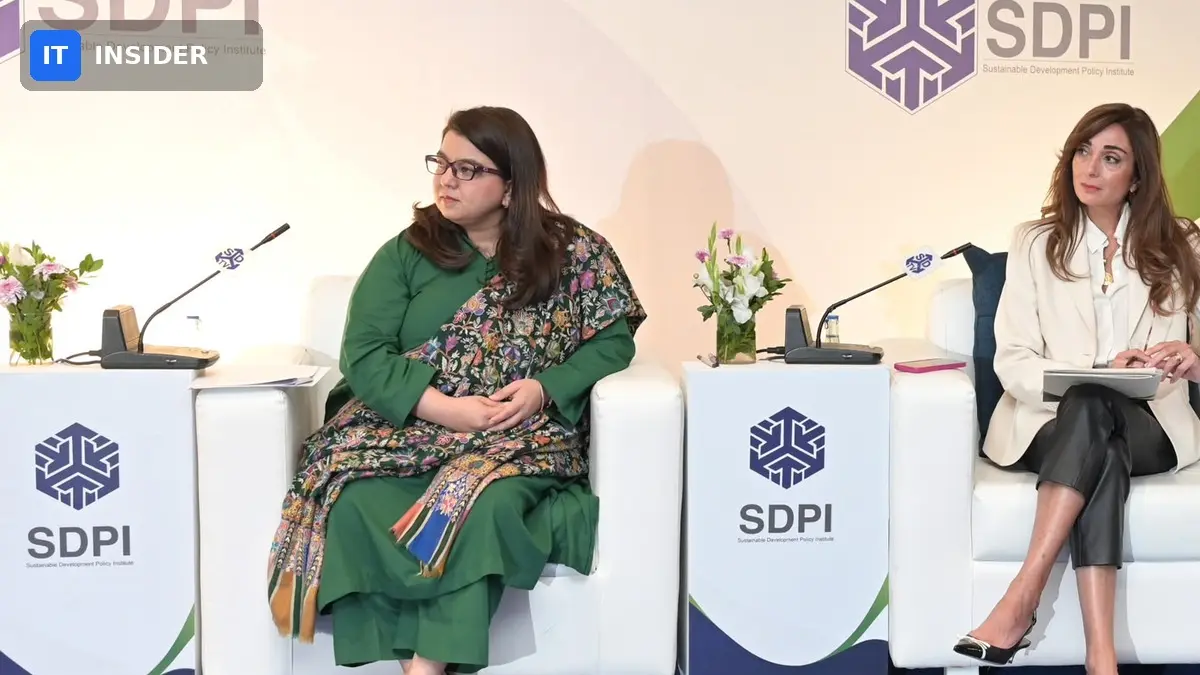
Islamabad: Federal Minister for Information Technology and Telecommunication Shaza Fatima Khawaja has said that a balanced, coordinated and proportionate strategy is essential to tackle online harms, while protecting national security, citizens’ privacy and digital innovation at the same time.
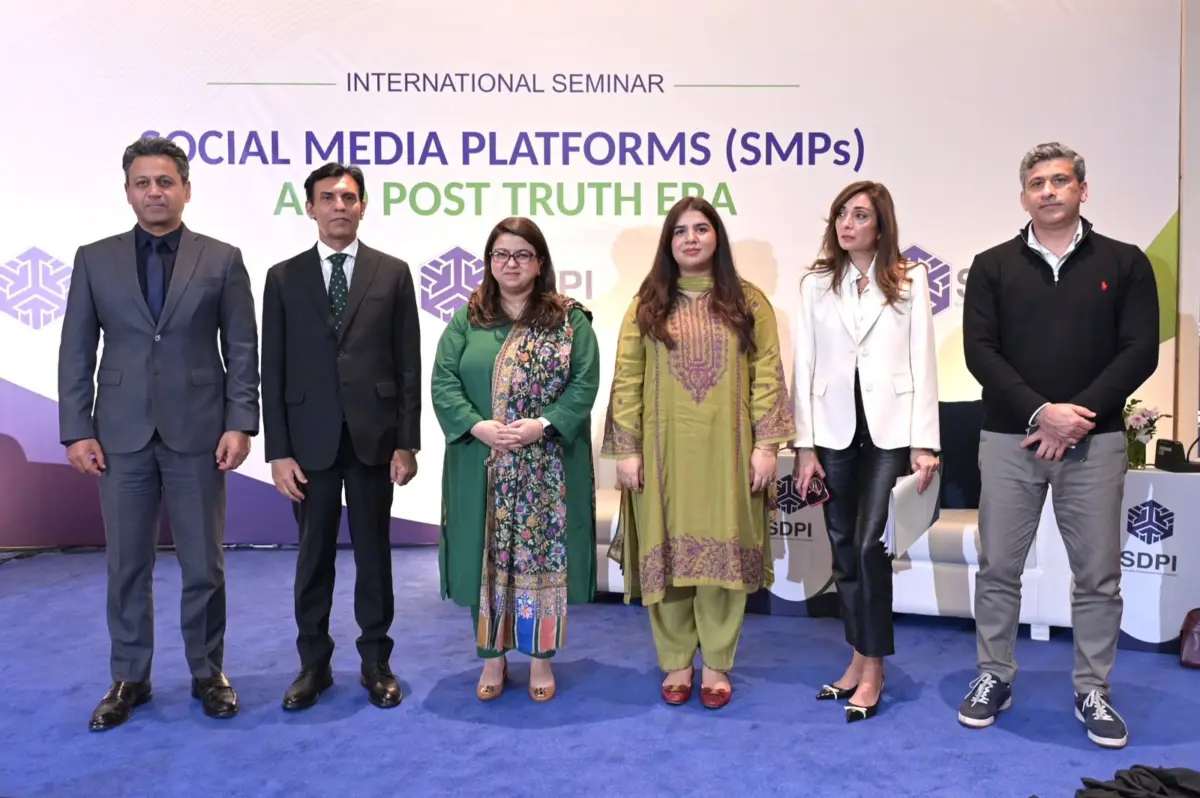
She was speaking at a panel discussion during the Sustainable Development Policy Institute (SDPI) international seminar “Social Media Platforms (SMPs) and Post Truth Era” in Islamabad on Tuesday, 24 November 2026.
The minister said national security, counter-terrorism, citizen protection and privacy must remain top priorities, but innovation and the opportunities coming from digital technologies also need to be protected.
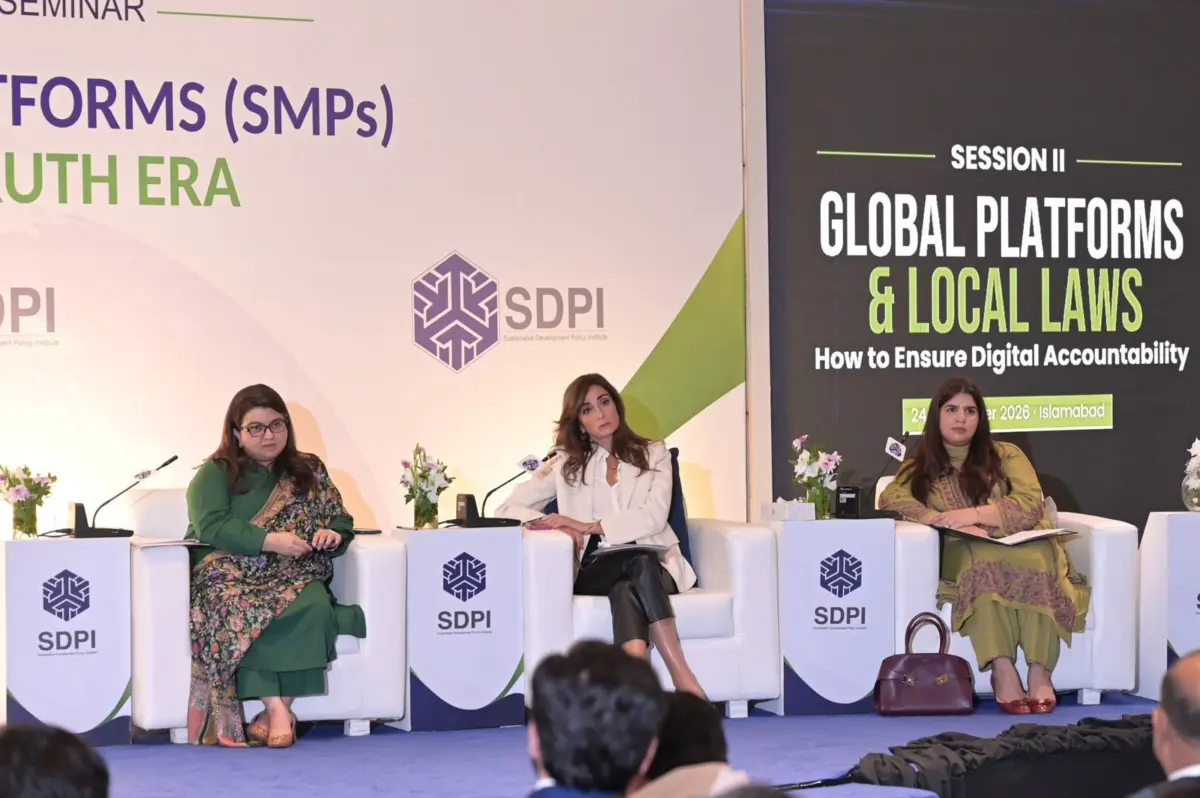
Platform rules vs local laws: the “grey areas”
Responding to a question, she said difficulties arise when the community guidelines of social media platforms do not match local laws and circumstances. A large number of online matters fall into “grey areas” where understanding the context is essential, because not every issue is clearly covered in local legislation.
She stressed that complaints sent to platforms must include clear explanations of the relevant legal provisions and local background, so that platforms can review and respond to them effectively.
How the government sets priorities
The minister said the government identifies several concerns, including threats to national security, citizen privacy, smear campaigns, misinformation and possible economic harm. In setting priorities, the severity and urgency of each matter must be considered.
“Threats to national security, terrorism, and human life and safety sit at the top, while gender-based abuse particularly targeting female public figures also demands serious attention,” she said.
Financial and economic security, defamation and misinformation are among the other issues that must be judged by their context and urgency.
| Priority level | Online harm |
|---|---|
| Top | National security, terrorism, human life and safety |
| Serious attention | Gender-based abuse, especially against female public figures |
| Judged by context and urgency | Financial and economic security, defamation, misinformation |
Shaza Fatima said there can be no compromise on national security, counter-terrorism and the protection of citizens’ privacy, but decisions cannot always follow a simple “black-and-white” formula.
She gave the example of visual content that appears to show weapons, which may not on its own meet a platform’s threshold for removal, even when authorities have additional information that gives it a serious security context. This, she said, shows why the evidence, attribution and circumstances behind a complaint must be explained.
Better engagement with platforms
The minister said engagement with social media companies has improved over the years, though more progress is needed. The government is in contact with platforms on complaint redressal mechanisms, standard templates and better coordination.
She warned that sending a high volume of complaints without proper legal references or context can reduce compliance, so complaints must be clear, well reasoned and prioritised.
She said the Pakistan Telecommunication Authority (PTA) has played an important facilitating role in engaging with platforms. However, PTA’s core mandate is licensing operators and networks, while the changing nature of digital challenges needs specialised institutional capacity. She referred to the roles of the Social Media Regulatory Authority (SMRA) and the National Cyber Crime Investigation Agency (NCCIA), which are building their capacity within their mandates.
Blocking a platform should be the last step
Calling for a proportionate response, the minister said banning or blocking a platform should only be considered at the final, extreme end of a wide range of measures.
Public awareness, digital literacy and citizens’ ability to tell accurate information from falsehoods are essential parts of the response, she said. Awareness efforts by the media, the information sector and technology platforms can help build a safer online environment.
She said every action by users and platforms must carry clear and proportionate consequences under a well-defined regulatory framework, one that strengthens accountability without excessive restrictions that stifle innovation.
“Technology is like water: people will continue to use it and find alternative pathways,” she said. “Hence, policies must avoid pushing young people toward unregulated platforms or services that lie beyond the reach of existing oversight.”
Zero tolerance for organised propaganda
The minister said the government will take stricter action against anti-state propaganda, while clearly separating it from legitimate and constructive criticism. She said there should be zero tolerance for false and organised propaganda against Pakistan, its state institutions or individuals.
The government remains in dialogue with social media platforms and other governments on these matters, including geo-fencing. Pakistan’s position, she said, is that content involving such serious violations should be removed globally rather than only restricted inside Pakistan.
She said another challenge is that people involved in harmful online activity hide their identities using AI-generated or unrelated images, unidentifiable names and hidden locations. The government is also working on cross-border activity, including cases where people involved in anti-state activities may have links with terrorist networks.
Pakistan is advancing cooperation with friendly countries through threat intelligence arrangements and Memoranda of Understanding (MoUs), she said. She referred to the work of the National Cyber Security Centre (NCSC) and said the National Cyber Security Authority is being set up.
Action against repeat offenders
The minister said that because anti-state propaganda keeps spreading, the volume of complaints sent to platforms remains high. She has directed the ministry to adopt a lasting response against repeat offenders, including profiles that are recreated again and again with small changes to usernames, such as adding a dot or repeating letters.
Concluding, she said countering online harms needs a whole-of-ecosystem approach involving security agencies, regulators, the ministry, social media platforms, media and citizens. Through continuous coordination, better threat intelligence, context-based complaints, public awareness and proportionate regulation, these challenges can be overcome while Pakistan’s digital economy and innovation grow.
Key points
- Balanced, proportionate strategy needed against online harms
- Complaints to platforms must explain the law and local context
- National security, terrorism and human safety are top priority; gender-based abuse needs serious attention
- Blocking a platform only as the last resort
- Zero tolerance for organised anti-state propaganda, but legitimate criticism protected
- Lasting action against repeat offenders who recreate accounts
- National Cyber Security Authority being set up
Also read: Social Media Platforms Must Act on Fake News, Ministers Say
FAQs
What did Shaza Fatima say about online harms?
She called for a balanced, coordinated and proportionate strategy that protects national security and privacy without stifling digital innovation.
Does the government plan to block social media platforms?
The minister said blocking or banning a platform should only be considered as the final and extreme step in a wide range of measures.
Where did she speak?
At a panel discussion during the SDPI international seminar “Social Media Platforms (SMPs) and Post Truth Era” in Islamabad on 24 November 2026.
Source: ITInsider correspondent at the SDPI seminar, Islamabad.
Featured photo: Shaza Fatima Khawaja at the SDPI seminar in Islamabad. (Photo: Ikram Ullah Joyia)