
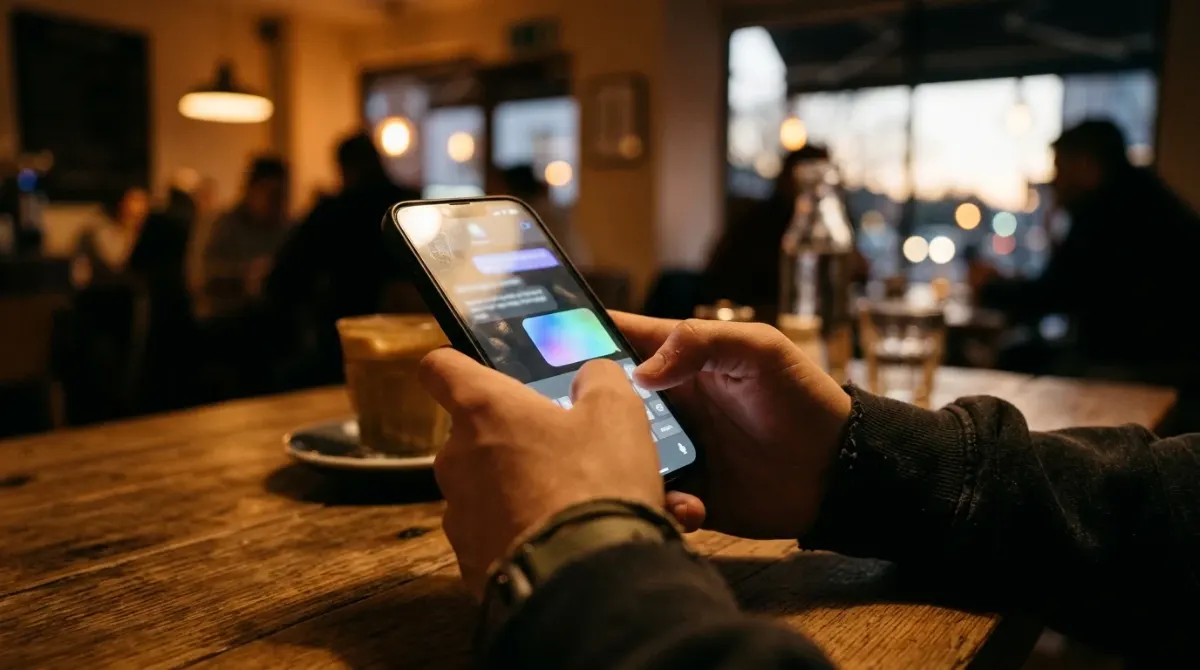
Meta has started putting its Meta Muse AI assistant directly inside Instagram direct messages, so users can chat with the AI agent in a DM thread without leaving the app. The company announced the change on Tuesday, 24 November 2026, and said the feature is rolling out first on iOS and Android in the United States, Canada, Mexico, Japan and Singapore.
Until now, people who wanted to use Muse had to switch between Instagram and the separate Muse app. With the new integration, the assistant sits in the same inbox where users already talk to friends and share posts.
What Meta Muse AI can do inside Instagram
According to Meta, users can open a chat with Muse to get more context about a post, a place or a product they come across while scrolling. They can also ask the assistant to help them catch up on conversations they may have missed in other DM threads.
Users can share an Instagram post with Muse and ask it to act on it. Meta gave examples such as adding a coffee shop from a post to a travel itinerary, or looking for a Black Friday deal on a pair of shoes seen in a reel.
Conversations held with Muse on Instagram will also show up as a side chat in the main Muse app, so the two experiences stay linked.
Saved posts get an AI organiser
Alongside the DM feature, Meta announced new ways to use the posts and reels people bookmark on Instagram. Users can ask Muse to sort saved content into custom folders, which Instagram calls Collections.
The assistant can also turn saved material into something practical, Meta said. A recipe video can become a grocery list, travel content from favourite creators can be turned into a trip plan, and fashion reels can be used to suggest outfit ideas.
From Tuesday, when users save a post, they will see a prompt offering to let Muse organise it. This saved-content feature is launching only in the United States and Canada for now.
Control and privacy
Meta says users stay in control of how Muse works on Instagram. The company said nothing is shared, published or sent without the user’s approval, and people can ask Muse to forget information or undo actions at any time.
Why it matters
The move is part of a wider race among large technology companies to place AI assistants inside apps people already open every day, rather than asking them to download and learn a new product. By building Muse into Instagram, Meta gives its agent direct access to a platform where users discover products, places and creators, which also has clear value for shopping and advertising.
For Pakistan, the feature is not yet available, as the country is not among the five launch markets Meta named. Instagram is widely used in Pakistan by consumers, creators and small online sellers, so any later expansion of AI tools inside the app could change how local brands and e-commerce businesses reach customers. ITInsider recently reported that AI adoption among Pakistani businesses has slowed, which shows how consumer AI tools from global platforms often arrive before local companies build their own.
Meta has not said when Muse in Instagram DMs will reach other countries.
Key facts
- Meta Muse AI can now be used inside Instagram DMs.
- Rollout began on 24 November 2026 for iOS and Android users in the US, Canada, Mexico, Japan and Singapore.
- Users can ask about posts, places and products, and catch up on missed DM conversations.
- Muse can organise saved posts into Collections and turn saved content into lists or itineraries (US and Canada first).
- Meta says nothing is shared or sent without user approval, and users can ask Muse to forget information.
FAQ
Is Muse in Instagram DMs available in Pakistan?
Not yet. Meta listed only the US, Canada, Mexico, Japan and Singapore for the first rollout.
Do users need the separate Muse app?
No. The point of the update is that users can chat with Muse in an Instagram DM thread, though those chats also appear in the Muse app.
Can Muse post or send messages on its own?
Meta says nothing is shared, published or sent without the user’s approval.
Official sources: Meta announcement on Muse for Instagram, 24 November 2026.
Featured image: representational, AI-generated