
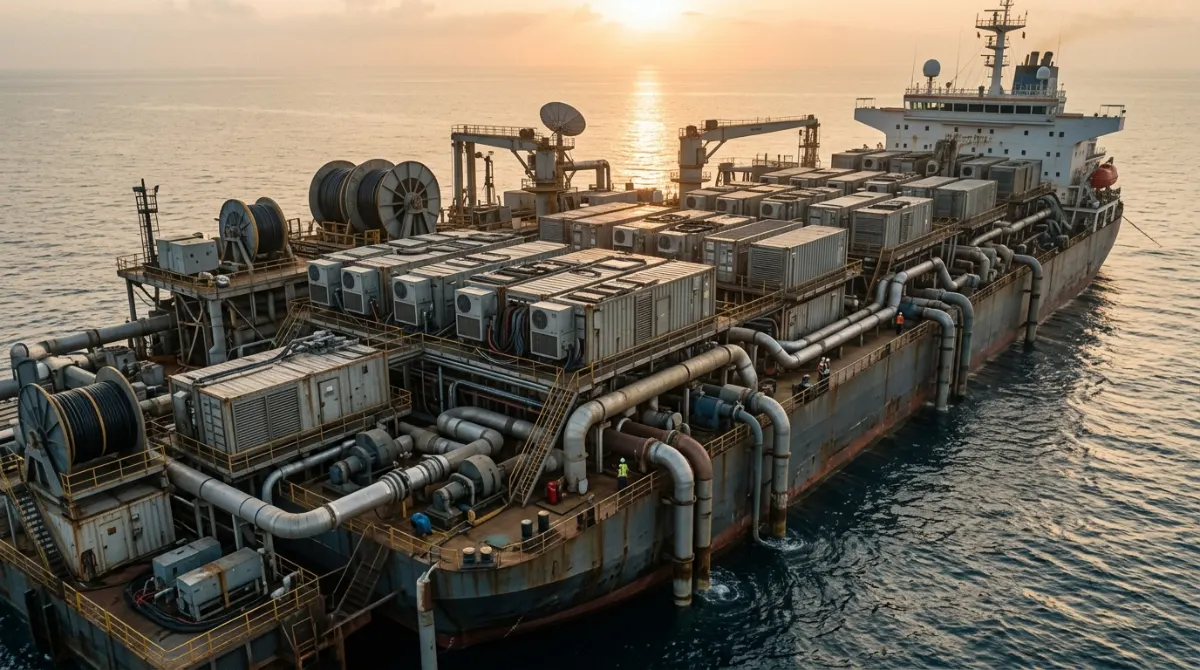
Drogue, a six-month-old startup based in Washington, DC, has raised $20 million to build floating data centres powered by heat from the ocean.
Investors include XYZ Venture Capital, Toyota Ventures, Tamarack Global, Dream, FDVC, Garuda Ventures, Flexcap, Boost VC and Slow Ventures, according to TechCrunch. The company is led by co-founder and CEO Sam Sipe, a former US Navy pilot who flew E-2D Hawkeyes from aircraft carriers.
How ocean heat makes power
Drogue uses ocean thermal energy conversion (OTEC), a method first developed in the 1950s and tested in the 1980s before being abandoned. It works like a heat pump in reverse, using the temperature difference between warm surface water and cold deep water.
- Warm surface water cools the servers and then heats ammonia until it boils.
- The ammonia gas spins a turbine to make electricity.
- Cold water pumped up from 1,000 metres deep, at about 4 degrees Celsius, turns the gas back into liquid in a sealed loop.
Sipe says newer methods for making pipes and heat exchangers now make the approach practical.
Why put data centres at sea
Sipe argues that AI demand has grown tenfold in three years while the data centre industry plans on eight- to ten-year timelines. Sending power to shore needs long, costly cables, but servers are compact and sending data off a platform is cheap. Each vessel would operate at sea for about a decade.
Prototype by 2028
Drogue designed a multi-megawatt prototype in its first six months. It will be installed on an ocean-going ship that the company is now buying, and is due to go to sea in early 2028. Later versions would sit on floating structures similar to offshore oil platforms. The design has received “approval in principle” from the American Bureau of Shipping.
The idea is part of a wider search for new power sources for AI, alongside proposals such as orbital data centres, as electricity becomes one of the biggest limits on AI growth.