The State Bank of Pakistan (SBP) has said it cannot require shops and superstores to accept contactless payments made with smartphones, smartwatches and other wearable devices, because merchants do not fall under its direct regulation.
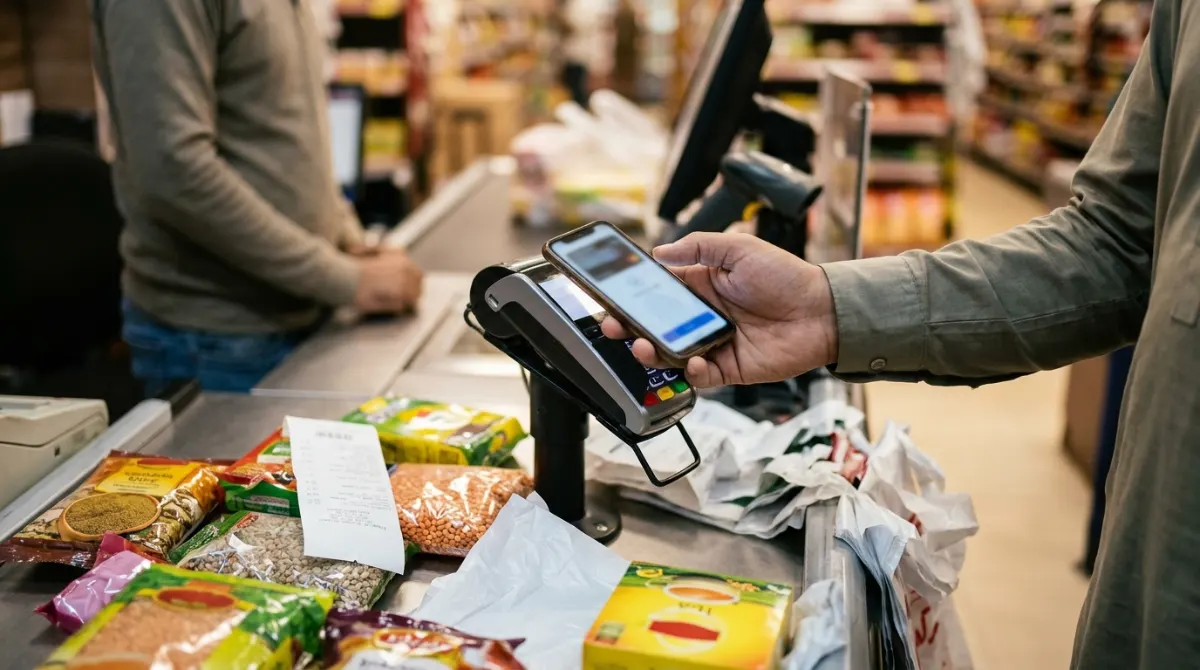
The central bank’s position, first reported by ProPakistani on Saturday, comes after several retailers stopped or restricted near-field communication (NFC) payments made through phones and wearables while continuing to accept tap-to-pay debit and credit cards. Metro was among the stores named in that report.
According to the SBP, it does not regulate merchants and therefore cannot direct them to accept any particular payment method. In practice, this means the regulator cannot order a seller to restore phone-based tap payments, or to support a specific digital payment option, even where the underlying payment network can handle it.
A grey area for phone-based contactless payments
For shoppers, the change at some tills has created confusion. A customer may be able to tap a physical card at a counter but be turned away when trying to pay with the same card stored in a phone or a smartwatch.
The SBP’s response makes clear that the choice sits with the merchant. Banks and payment service providers work under the central bank’s rules, but the decision on which methods a shop accepts at the point of sale is a commercial one made by the retailer.
The clarification does not say why individual stores have restricted phone payments. It only sets out that the regulator has no tool to reverse those decisions.
Who is liable when a tap payment is disputed
The central bank also addressed a related question that has worried users of PIN-free payments: who carries the loss if a contactless transaction turns out to be fraudulent.
According to the SBP, card payment schemes such as Visa, Mastercard and the domestic scheme PayPak have their own liability and dispute-resolution frameworks. These cover customers, merchants and acquiring banks, and set out the rights and responsibilities of each party.
Responsibility in a disputed case is decided on a case-by-case basis, depending on the actions, omissions or negligence of the parties involved. Liability is not automatically placed on the customer or the merchant simply because a contactless payment is challenged. The SBP said these scheme rules are designed to protect customers.
PIN-free limit stays at Rs3,000
The central bank’s response also settled the maximum amount that can be paid by tapping without entering a PIN. The current limit for PIN-less contactless payments in Pakistan is Rs3,000, not Rs3,500 as some users had believed.
The cap applies whether the payment is made with a smartphone, a smartwatch or a physical contactless card. Purchases above that amount require the cardholder to enter a PIN.
What it means for Pakistan’s cashless push
The clarification lands at a time when the government is pushing hard to cut cash use. The prime minister has ordered a time-bound roadmap for a cashless economy built around Raast, and ITInsider reported this week that Islamabad government offices will stop taking cash from November 30. The government has also extended the Raast QR subsidy for merchants.
The SBP’s answer shows the limit of that push at the shop counter. Regulators can shape how banks and payment providers operate, but whether a customer can pay with a phone at a particular store still depends on the store itself. That matters as more Pakistanis add cards to mobile wallets, and as reports suggest Apple Pay could launch in Pakistan in the coming weeks.
Key facts
- SBP says it does not regulate merchants and cannot make them accept any specific payment method.
- Some stores, including Metro, have restricted NFC payments from phones and wearables but still accept contactless cards.
- Disputed contactless payments are handled under Visa, Mastercard and PayPak liability frameworks, case by case.
- The PIN-free contactless limit in Pakistan is Rs3,000.
FAQ
Can a shop in Pakistan refuse payment by phone or smartwatch?
Yes. According to the SBP, merchants are not directly regulated by the central bank, so it cannot force them to accept phone-based contactless payments.
Who pays if a PIN-free tap payment is fraudulent?
It depends on the case. The card scheme’s dispute rules decide liability based on what the customer, merchant and acquiring bank did or failed to do.
What is the maximum PIN-free contactless payment?
Rs3,000 per transaction. Above that, a PIN is required.
Official sources: State Bank of Pakistan (response first reported by ProPakistani)
Facts and figures checked against official sources by the ITInsider desk.
Featured image: representational, AI-generated