
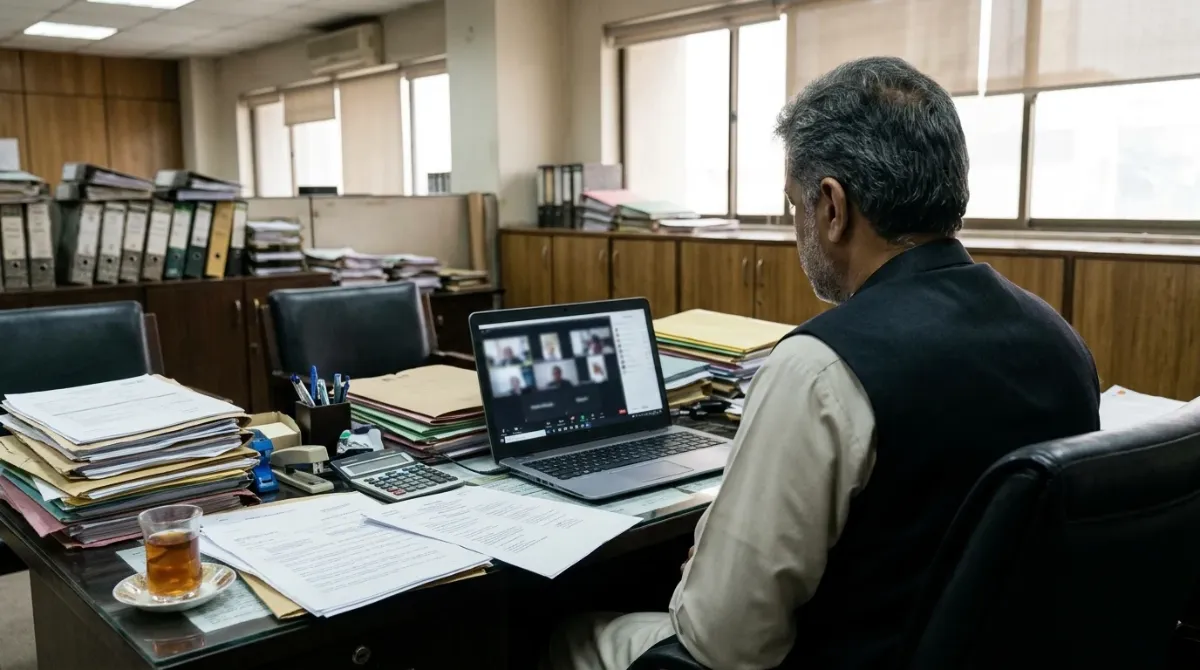
The Federal Board of Revenue (FBR) has proposed a faceless appeals system that would move income tax disputes online and keep the identity of the deciding commissioner hidden from both sides, according to a draft notification issued on 18 November.
The draft would add a new Chapter XIX-A, titled “Faceless Appeals”, to the Income Tax Rules, 2002. The framework is still subject to final notification.
How FBR faceless appeals would work
Under the proposal, an Appeals Wing made up of Appellate Units, each headed by a Commissioner (Appeals), would handle eligible cases through the FBR’s e-portal. The wing would work under the Member (Legal), Inland Revenue, while keeping independence in deciding appeals.
Cases would be assigned to appellate units at random through an automated system. The assigned unit and commissioner would remain anonymous throughout the proceedings, including in the final order. Electronic orders would carry a Digital Identification Number instead of the commissioner’s name or signature.
Taxpayers would submit their evidence and arguments electronically. Hearings would take place through video conferencing or other secure digital facilities, so appellants would no longer need to appear in person. They could also ask for their appeal to be decided only on written submissions.
Safeguards in the draft
The draft bars any officer who was involved in a case’s audit, assessment, quality control or original order from deciding the appeal on that case.
It also recognises the risk of technical problems: confirmed failures of the e-portal could be accepted as a reason for delays in filing.
Appeals that are already pending would stay with their current commissioners unless the Board transfers them. Taxpayers’ existing option to appeal directly to the Appellate Tribunal under Section 127 of the Income Tax Ordinance would remain unchanged.
Affected persons can submit objections and suggestions within three days of the draft’s publication in the official Gazette.
Why it matters
Face-to-face contact between taxpayers and tax officials has long been seen as a source of delay, pressure and discretion in Pakistan’s tax system. Random allocation, anonymous decision-makers and digital hearings are designed to cut that contact and make decisions more consistent.
The proposal builds on the FBR’s wider move towards faceless processes, including faceless assessment and audit, which rely on the same idea of digital files and randomly assigned officers. Its success will depend heavily on how reliable and easy to use the e-portal is, especially for smaller taxpayers who are less used to digital filing.
For businesses, including IT companies and freelancers who already deal with the FBR online, a fully digital appeals route could reduce travel and time spent on disputes. ITInsider has tracked other government services moving online as part of the same shift.
Key facts
- Proposal: new Chapter XIX-A “Faceless Appeals” in the Income Tax Rules, 2002
- Draft notification issued: 18 November 2026
- Cases filed and heard through the FBR e-portal and video hearings
- Random automated allocation; commissioner identity hidden, orders carry a Digital Identification Number
- Officers involved in the original case barred from hearing the appeal
- Objections: within three days of Gazette publication
FAQ
What is the FBR faceless appeals system?
A proposed online process for income tax appeals in which cases are assigned at random and decided by commissioners whose identity is not disclosed.
Will taxpayers need to attend hearings in person?
No. Hearings would be held by video conference or other secure digital means, or decided on written submissions.
Is the system already in force?
Not yet. It is a draft and remains subject to final notification after objections are considered.
Official sources: Federal Board of Revenue (FBR) draft notification amending the Income Tax Rules, 2002.
Facts and figures checked against official sources by the ITInsider desk.
Featured image: representational, AI-generated